
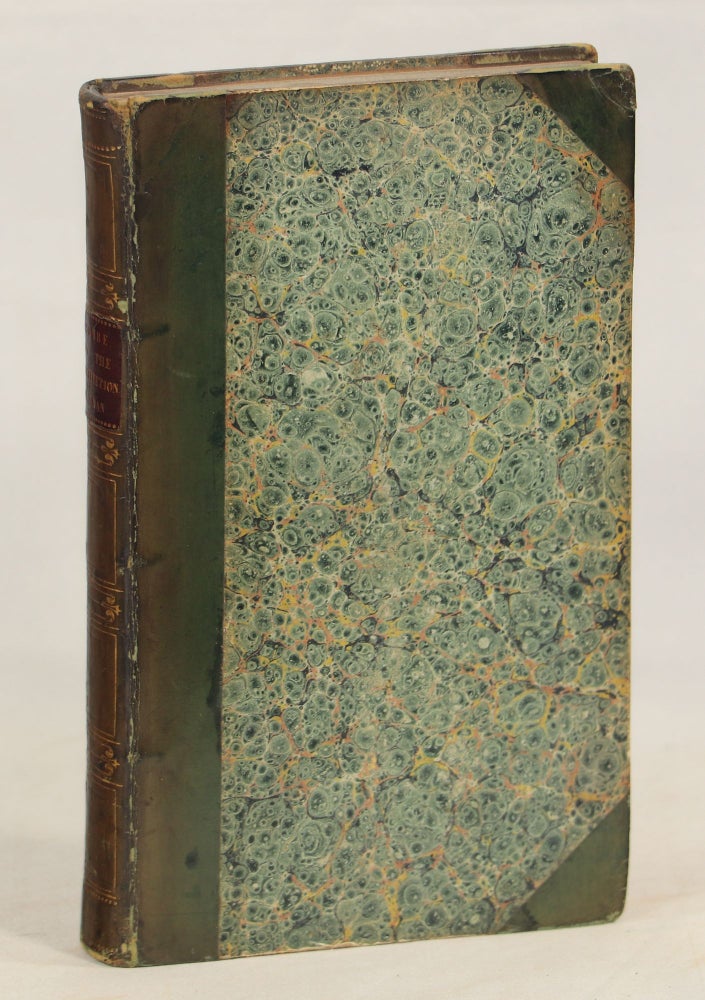


The Constitution of Man Considered in Relation to External Objects
Edinburgh: John Anderson, 1828. First edition. Hardcover. 12mo. [3], viii-xii, [1], 2-319, [2], 2-4 (pages of publisher's advertisements), [2] pp. Later half sheep, polished and dyed green over marbled boards with the spine in five compartments, gold decorations and a maroon morocco label lettered in gold on the spine; all edges sprinkled. Later brown endpapers and pastedowns. With the original endleaves bound in. Cooter 238.47. Oxford DNB, L. S. Jacyna, "Combe [Comb], George (1788–1858)". A major figure in phrenology, Combe founded the Edinburgh Phrenological Society in 1820. Jacyna calls this book his most important and influential work, and records that it sold hundreds of thousands of copies throughout the nineteenth century. The Oxford DNB article notes that Combe's messages of individualism and his goal of improving the human condition resonated deeply with the reading public. Although Combe advocates certain problematic doctrines of phrenology, like a person's aptitude being determined by their brain shape and size, he also writes that those in lower-class upbringings can improve their fortunes with education and better societal treatment. He also advocates strongly for the end of capital and corporal punishment, and believes prison reform ought to be tailored towards a person's mind, not the punishment of their physical body. Finally, this publication drew criticism from the English clergy as the role of the divine is not at all discussed in the natural laws or in the human physiology that Combe outlines in his book. Combe instead offers a secular vision of how the world works and how it could be made better for human beings. Very Good. Item #000012549
A small chip to the spine label, a later bookplate on the front pastedown, an ink note on the free front endpaper.
Price: $500.00